

02.11.2026
- 96 years ago - 02nd November 1930
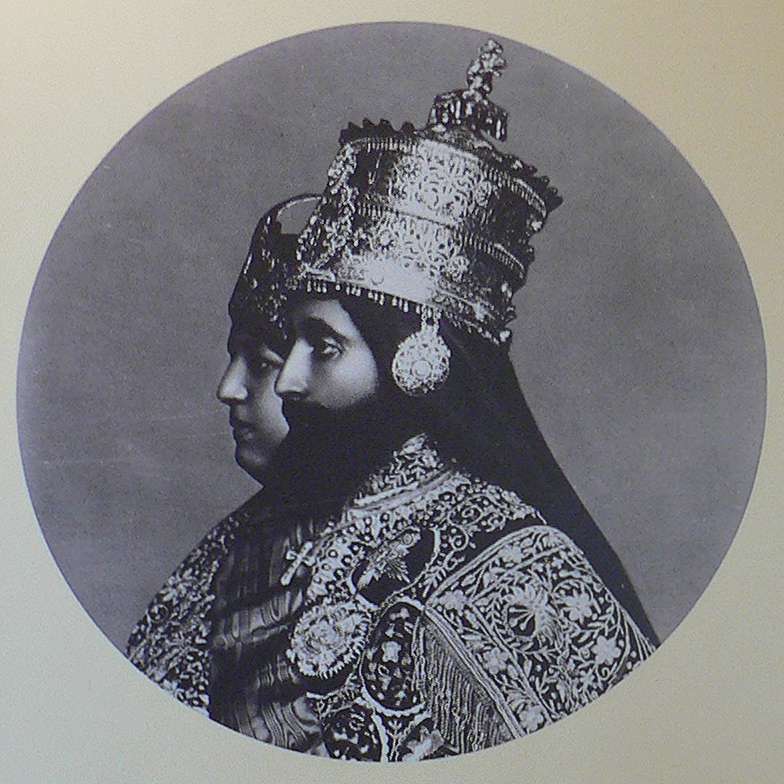
The coronation of Ras Tafari and Woizero Menen
By Mulugeta Haile
The coronation of Ras Tafari and Woizero Menen
By Mulugeta Haile
 |
Today history will mark the 96th anniversary of
the coronation of Ras Tafari and Woizero Menen. This is the story of
that epoch-making day — and of why time stopped in Addis
Ababa.
November 2, 1930, was one of those days history refuses to forget. At a
time when women were widely treated as second-class citizens, a Black
prince and princess were crowned together as Emperor and Empress
— breaking barriers and leaving a legacy to live on forever.
|
| For the
continent, it was unprecedented: the world's great powers gathered in
Addis Ababa — not to scramble for Africa, but to witness a
sovereign coronation that stood as a direct contradiction to their
racial theories.
Woizero Menen was crowned for the first time, but Ras Tafari had already been crowned twice, neither of which had been celebrated publicly for political reasons — first as Enderase (Regent) and later as Ras (king). This third crowning was deliberately made more than a ceremony — a triumph at home and abroad. At home, for fourteen years Ras Tafari's legitimacy had been questioned, and the ceremony settled, for doubting rivals and lords alike, who Ras Tafari truly was. Abroad, his name and Ethiopia's stature echoed through the global political landscape.  Painting in the St. George Cathedral in Addis Ababa November 2, 1930, marked three occasions at once: it fell on Senbet (Sunday, a holy day of rest); it was Tikimt 23 (November 2), the monthly feast of St. Giyorgis, whose Tabot — the Ark of the Covenant — is venerated as the victory Tabot; and it was the crowning of Ras Tafari and Woizero Menen — their Yezewd Beal (የዘውድ በዓል), the Feast of the Crown — the day they themselves had chosen. At the dawn of the coronation, as the long prayer service had ended at St. Giyorgis' Church, the selected priests of the Orthodox Tewahedo performed the sacred Dance of King David before God. Behind them, the Tabot that had accompanied Emperor Menelik and Empress Taytu to the Battle of Adwa stood motionless.  St. George Cathedral in Addis Ababa View in the church here. When the long procession reached its climax, Abuna Kerlos stood before Ras Tafari and announced: "As Samuel anointed David as Zadok and Nathan anointed Solomon, so I anoint you with this most sacred oil." From that moment, Ras Tafari was officially proclaimed as "Emperor Haile Selassie the First, King of Kings, Lord of Lords, Conquering Lion of the Tribe of Judah, Elect of God, and Light of the World," and that afternoon Woizero Menen became Etege Menen. To Ethiopians, this was more than a double coronation — it was an extension of an ancient order stretching back beyond memory. But for the European guests, including the foreign journalists, it was a lesson: an African monarchy older than any throne in Europe. According to the church scholars, Ras Tafari's lineage traces back through a direct line of descent — 334 generations from Queen Makeda, the 52nd ruler of the Aksumite Kingdom, and 225 generations from King Solomon, the third king of Israel. In 1930, Ethiopia stood as an island of freedom, proudly waving the flag of the Lion of Judah while surrounded by Italy, Britain, and France. In the midst of this, to host this coronation in front of the surrounding colonizers was like standing inside an open crocodile's jaws.  Taken from a historic photo in the Genet Leul Palace To these colonial powers, Ethiopia's freedom was a contagious threat; should it spill over its borders, it would endanger their presence on the continent. Now, to bring them to Addis Ababa and make them recognize Ethiopia's freedom was a victory greater than any won on the battlefield. The next day, November 3, 1930, the foreign journalists dispatched the news to the rest of the world. Prominent newspapers published the first eyewitness reports on their front pages, including The New York Times. Time magazine put Ras Tafari on its cover — the first Black person ever to be featured. In the depths of the Great Depression, prominent African American publications, including the Chicago Defender, the Pittsburgh Courier, and the Baltimore Afro-American, held the event up as the diaspora's last great hope for Black liberation. All the Black Press emphasized that the world's white superpowers sent delegates to bow before the Black Monarchy in Africa — the continent they had carved up among themselves. Members of Harlem's Abyssinian Baptist Church saw the fulfillment of prophecy. The Harlem pattern quickly extended to Jamaica, where it gave rise to the Rastafari spiritual, social, and economic movement. The abiding spirit of November 2, 1930, never left Haile Selassie, even after Mussolini's army drove him into exile. It kept him King of Kings, with the bearing of a leader who had lost nothing. Time magazine named him Man of the Year for marching to the battlefield despite an arms embargo, and for fighting on until Italian jets dropped forbidden poison gas. When he stood to address the League of Nations, he commanded the assembly under the majestic titles proclaimed at his coronation. This legacy preserved Ethiopia’s prestige as a symbol of an unconquered nation, paving the way for his victorious return to the throne on May 5, 1941.  The official victory monument on Meyazia 27 Square / Arat Kilo in Addis Ababa The coronation was the vehicle that carried him onto the global stage, and he never stepped off it. History has condemned many of the world's emperors for their crimes. History has crowned Haile Selassie again and again for his immortal legacy. November 2, 1930 — Time Stopped in Addis Ababa November 2, 1930 — The Day Africa Crowned a Dynasty Older Than Europe's Thrones November 3, 1930 — The World Answered መልካም የዘውድ በዓል (Melkam Yezewd Beal) — Blessed Feast of the Crown Text: Mulugeta Haile / Ethiopia Copyright: www.reggaestory.de |

