

14.10.2024 - APPEALING ENCOUNTERS
Contemporary African Art at the Biennale Arte in Venice
Text and photos: Werner Zips & Angelica V. Marte
„Getting to know strangers is a lost art that we should reclaim. Art can contribute to that.“
Danielle Freakley, Seychelloise-Australian artist at Biennale
 |
The 60th Venice Art Biennale, running from
April 20 to November 24, 2024, proves groundbreaking for African,
Indigenous, and other global art. Never before in its long history
since 1895 has non-Western art been so central to La Biennale Arte di Venezia.
Our focus will be primarily on Africa and her Diaspora, which aligns with the thematic interests of Reggaestory.de. For those unable to make the trip to Venice, the following descriptions and images aim to offer a glimpse. |
Encountering Diversity This year’s Biennale is an exhibition of encounters with the unfamiliar, even the unknown within oneself. It challenges the historical and contemporary dimensions of otherness and estrangement, which span the global impact of colonialism, imperialism, slavery and migration. But it does not stop at the level of self-estrangement and therefore provokes self-reflection. Its theme, “Stranieri Ovunque – Strangers Everywhere,” serves as a statement, concept, and provocation. It calls for a journey to Venice, long the unofficial world capital of tourism. More broadly, however, it calls for a far deeper journey into realms of experience that have largely remained hidden behind the veil of exoticism and “the exotic”. The first banal dimension confronts visitors immediately upon arrival at Santa Lucia train station, with the jostling of bodies in a crush of luggage. It continues on the crowded vaporetto, packed with sweating bodies “from all corners of the globe”. This offers a glimpse into the everyday experience of Venice, with its roughly 50,000 locals and up to 165,000 daily visitors during peak season. “Strangers everywhere” – this fits Venice like the proverbial glove. Brazilian curator Adriano Pedrosa makes this connection quite deliberately. The artistic director of the São Paulo Museum of Art was inspired in his theme by the anarchist collective Stranieri Ovunque from Turin, which emerged in the early 2000s to combat racism and xenophobia. In his words, this (self-)critical dimension relates to unequal freedom of movement and differing living conditions: “The backdrop for the work is a world rife with multifarious crises concerning the movement and existence of people across countries, nations, territories and borders, which reflect the perils and pitfalls of language, translation, nationality, expressing differences and disparities conditioned by identity, nationality, race, gender, sexuality, freedom, and wealth. In this panorama, the expression Foreigners Everywhere has several meanings. First of all, that wherever you go and wherever you are you will always encounter foreigners—they/we are everywhere. Secondly, that no matter where you find yourself, you are always truly, and deep down inside, a foreigner.” Ambivalences on the move For Pedrosa, the phrase “Strangers Everywhere” can also be a motto, a slogan, a call to action, or a cry of joy, excitement, or fear. Moreover, it refers to the contemporary (politics of) fear in Europe and elsewhere regarding growing refugee movements. For those who find trigger words in the idiom of identities, this art journey may be particularly recommended. The exhibition largely refrains from moralizing voices that are often too high-pitched for human ears in current antagonisms. While it does focus on identities and their historically burdened relationships, it avoids the pitfalls of identity politics, which often equate one’s own identity with inherent goodness and infallibility. Here are just a few highlights, which are by no means intended to limit personal exploration of the 331 artists and numerous events surrounding the Biennale. Not from Outer Space Let’s begin chronologically in the entrance hall of the Arsenale, explicitly dedicated to the theme. Framed by the multicolored, multilingual neon signs of Stranieri Ovunque by Claire Fontaine, visitors are met by the life-sized sculpture Refugee Astronaut VIII by Yinka Shonibare. Dressed in African attire, the figure evokes associations with African boat refugees. A bulging backpack of earthly possessions and a diver’s helmet with an oxygen tank condense the sculpture into an allegory of looming environmental catastrophes and humanitarian crises. 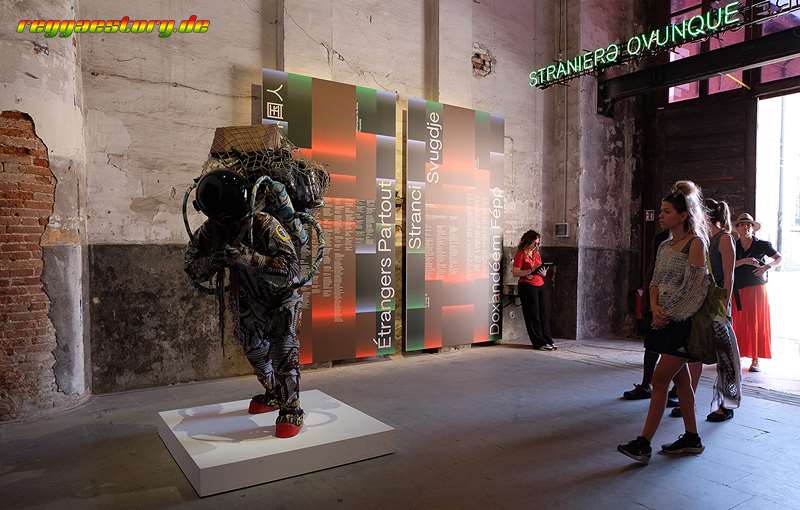 Refugee Astronaut VIII“ by Yinka Shonibare As is often the case at this strikingly interactive Biennale, it is worth lingering at this artwork, not only to read the accompanying text but especially to observe the varied reactions of visitors to this entrance piece. True to the saying “Is this art or can it go?” many pass by Shonibare’s refugee astronaut as if it were a mere signpost. The work exemplifies the central themes of migration and decolonization, just as the selection of artists—according to Adriano Pedrosa (in the exhibition catalog)—consists predominantly of individuals who are themselves foreigners, immigrants, expatriates, diasporic, émigrés, exiled, or refugees. Mainstreaming African Art In keeping with our own focus, we concentrate on artists from Africa and the African diaspora, which is possible at this Biennale to an unprecedented extent. No fewer than 18 out of 87 national pavilions present art from African perspectives. In addition to the African national exhibitions from Egypt, Ethiopia, Benin, the Democratic Republic of the Congo, Cameroon, Nigeria, Côte d’Ivoire, Senegal, Seychelles, Zimbabwe, South Africa, Tanzania, and Uganda. Western countries such as France, the UK, Canada, the Netherlands, and Portugal also feature African perspectives prominently. Jamaica showcases works by Osmond Watson and Edna Manley, whose name is synonymous with the renowned Edna Manley College of the Visual and Performing Arts, highly influential in reggae culture. Combined with the pervasive Indigenous focus and other aspects of diversity, the Biennale stands as a passionate call for cultural diversity and the enrichment of mutual strangeness. 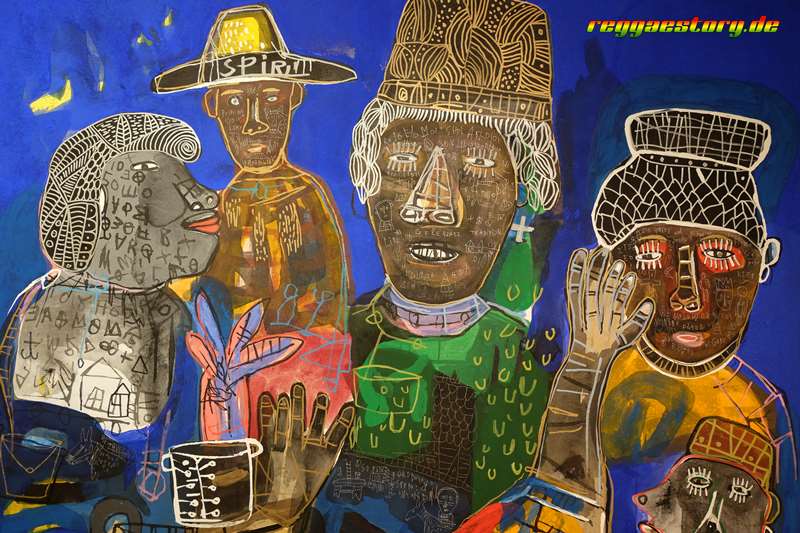 The Influence of the Colonial Administration von Hako Hankson, Cameroon Pavilion 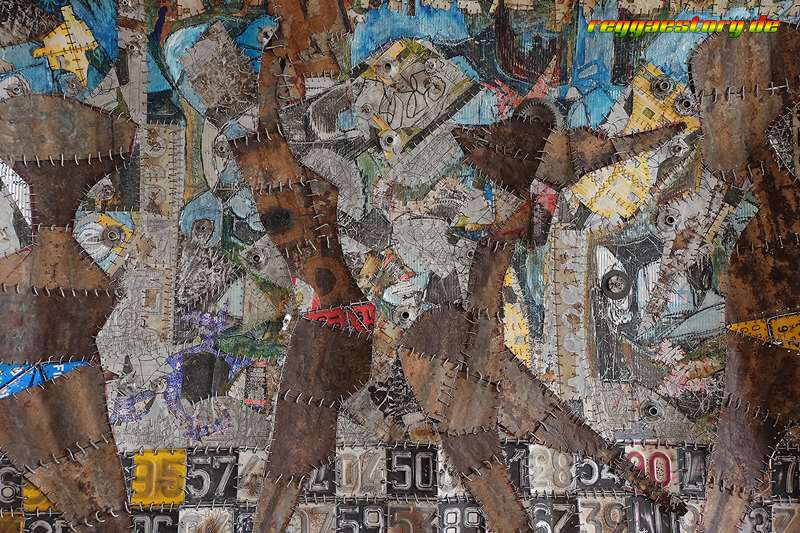 Elange Mbu Calendar by Jean Michael Dissake, Cameroon Pavilion 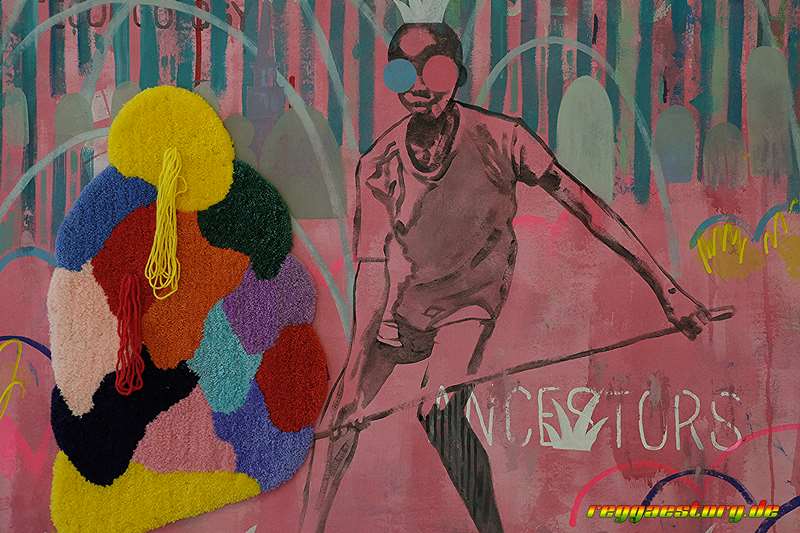 Korokoza Unlimited by Kombo Chapfika, Zimbabwe Pavilion “Finally, contemporary art from Africa, Asia, and all other parts of the world has reached the Biennale, perhaps the European epicenter of contemporary art,” says Professor Thomas Fillitz, an expert on African art and biennales in Africa. For him, the physicality of fully engaging with the experience of the other is central: “If we do not allow for this physical experience, which so many African artists speak of, and instead always compare African to European or American art, we miss the crucial point – empathy and a shift in perspective.” Decolonization by (he)art Julien Creuzet, who was bestowed with the entire French pavilion for his multimedia art, might well agree. 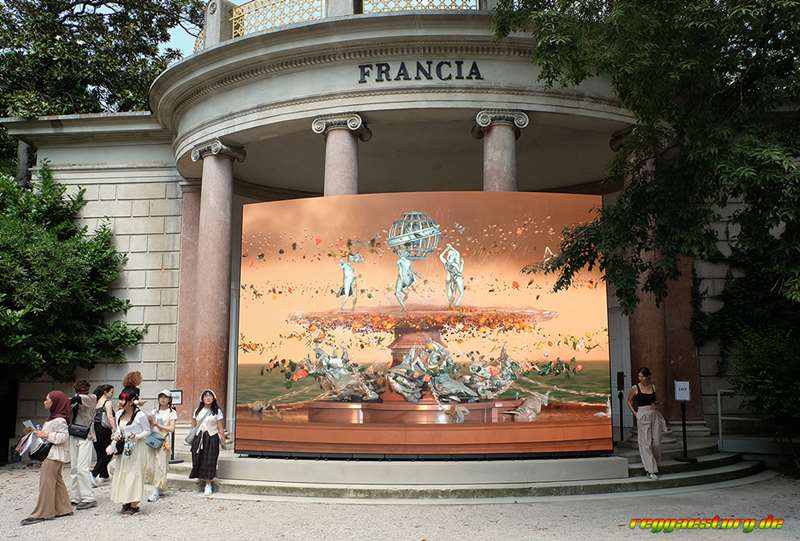 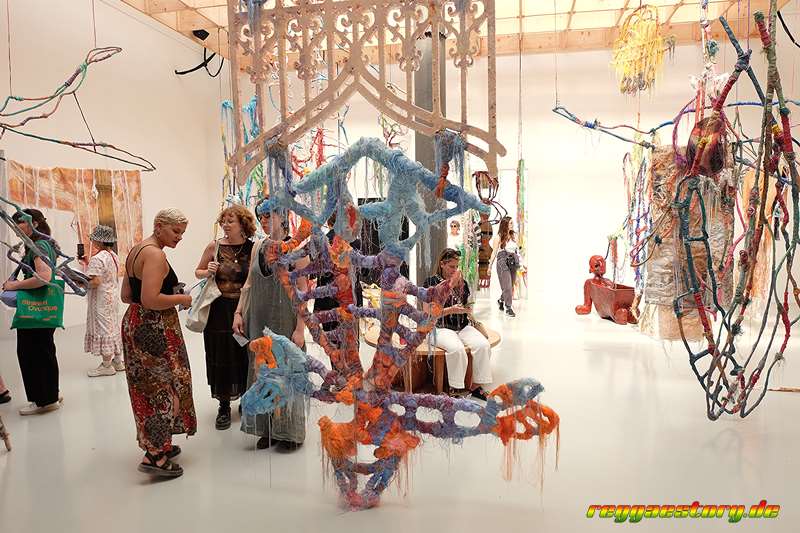 Julien Creuzet, French Pavilion By relocating the French press conference to the Caribbean Island of Martinique, he set a bold statement on decolonization, turning the established certainty of center and periphery upside down. The choice of Édouard Glissant’s home for the press gathering, a philosopher, author and Caribbean protagonist of postcolonial thinking, emphasized the programmatic inversion of cultural hierarchies. Born in Le Blanc-Mesnil near Paris, Creuzet draws inspiration from his African-Caribbean heritage, which may also be reflected in the powerful dreadlocks that accentuate his appearance. For him, the physical experience of art is key: “To me it was necessary to come here. I was brought up here in Martinique. I was trained at the art school by the pictures and the landscapes we have around and sometimes within ourselves, in our body, our blood, in the DNA, as part of us. It is not a press conference to me, we can define later what this is, it is not a press conference, this is important. It will be difficult for me to explain what is in this French Pavilion. It is resorting to the body. This pavilion will require great attention what is to be seen or watched. Eeking for this large spider tarantula trying to find it in the depths of the leaves. Sometimes you just dream of it.” 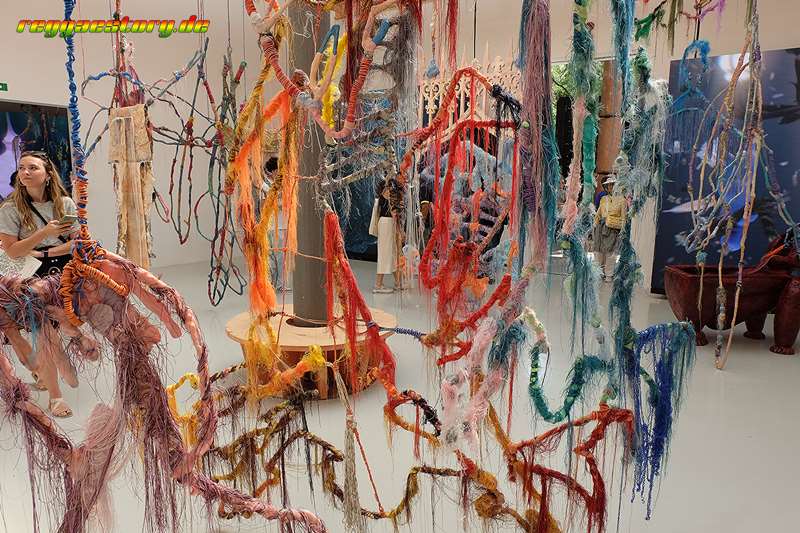 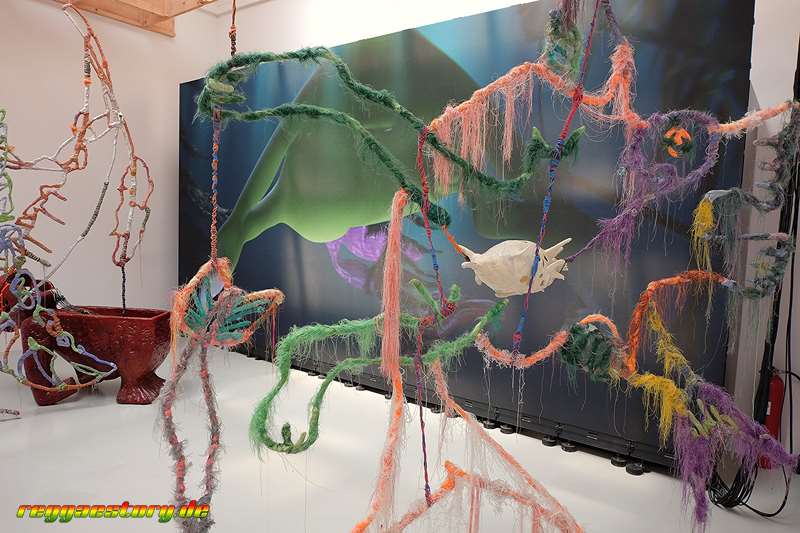 Julien Creuzet, French Pavilion The freely available exhibition poster symbolizes this, showing a tarantula on one side and nature-related poems by Julien Creuzet on the other. His holistic art or “Gesamtkunstwerk” of installations, video walls, sculpture, scents, sounds, music, and poetry evokes the sensory experience of nature and its destruction by humans, most poignantly depicted in an animated video where a sea turtle becomes repeatedly entangled in a so-called ghost net. This theme of entanglement and disentanglement ties together human-environment relations and the reverberations of colonization. The multimedia pavilion of the Martinican-French artist engages so many sensory and perceptual realms that a visit of several hours is recommended. 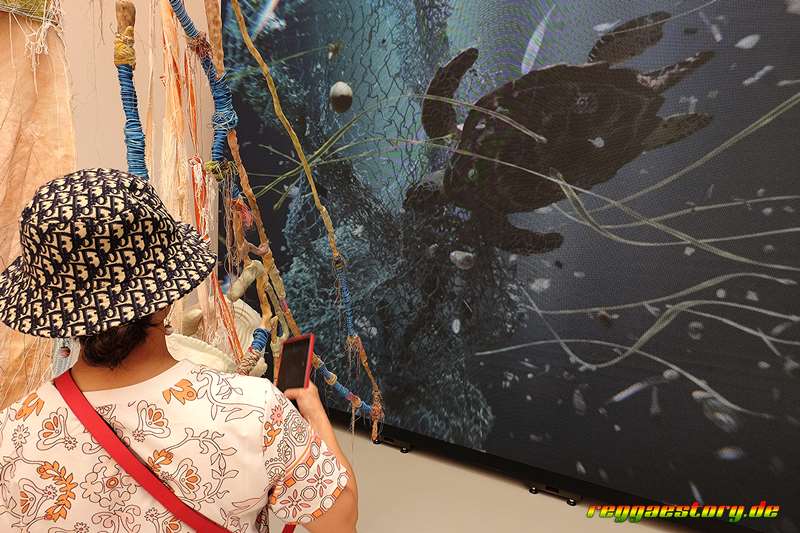 Julien Creuzet, French Pavilion Fragility as strength In the national pavilion of West African Benin, these ecological and social themes are complemented by a focus on the vital role of women in sustaining and renewing social unity. The pavilion’s motto, “All that is valuable is fragile,” culminates in the question of whether this fragility is a strength or a weakness. The works of artist Moufouli Bello present confident women as the backbone of society. At the center of the pavilion stands a walk-in round hut made from empty gasoline canisters, addressing the ephemeral nature of all existence – human, plant, and animal – within the context of Yoruba traditions. The loss of biodiversity makes human responsibility for the whole visible. 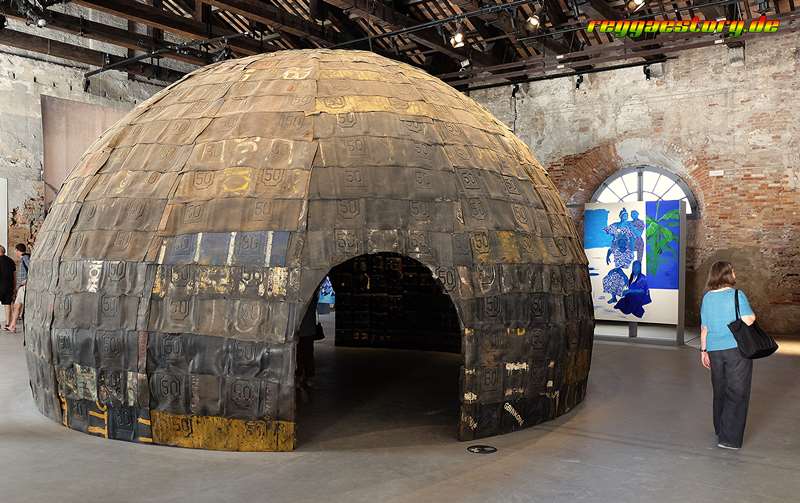 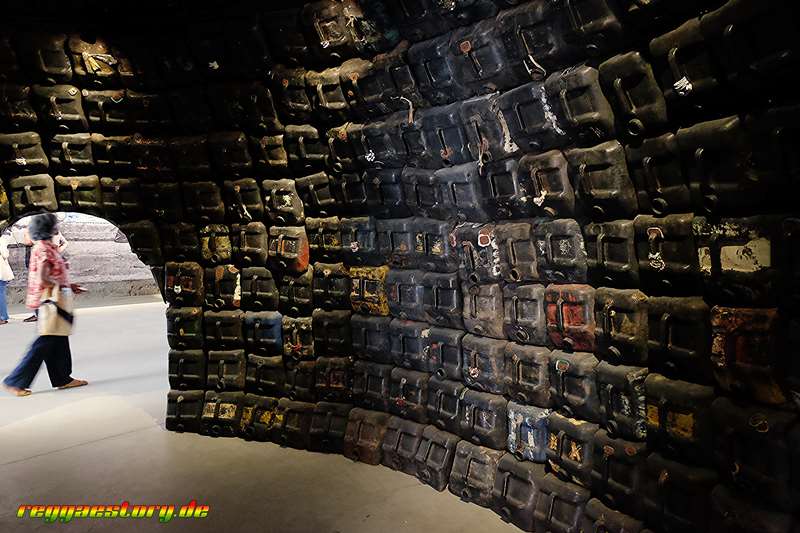 Ase by Romuald Hazoumè, Everything Precious is Fragile, Benin Pavilion 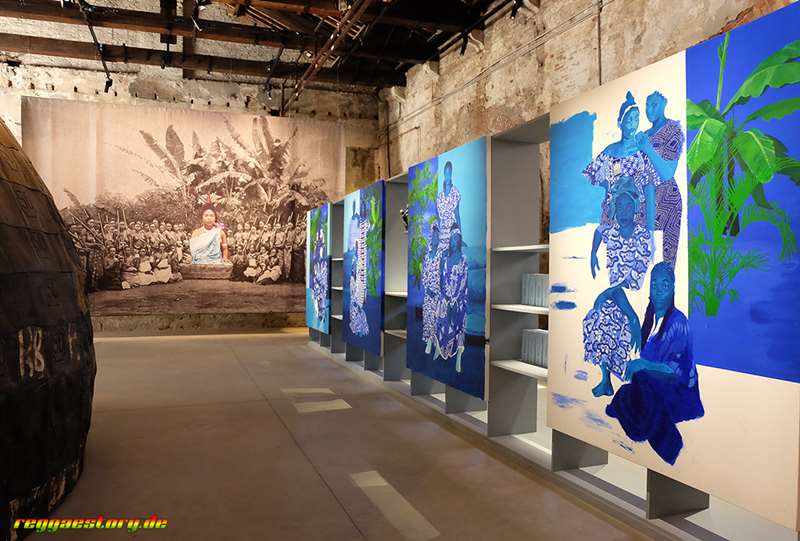 Egbé Mojisola by Moufouli Bello, Everything Precious is Fragile, Benin Pavillon A similar message is conveyed in the monumental works of Senegalese artist Aliou Diagne, whose 10x4 meter paintings dominate his country’s pavilion in the Arsenale. His unique, puzzle-like technique brings unconscious symbols to life as dynamic paintings. In his native Wolof, his project is titled Bokk, meaning “group” or “connections,” urging unity in the face of planetary challenges, especially those related to climate change. Viewed up close, his images appear abstract, but from a distance, they merge into scenes of everyday life in Senegal. Scattered in front of the paintings lies a broken pirogue, symbolizing not only the fishing boats used in illegal migration to Europe but also, more deeply, shattered dreams and broken promises. 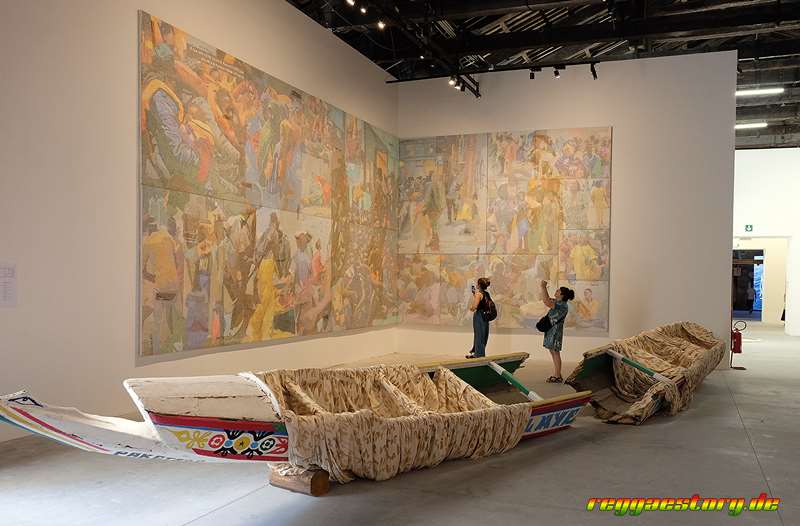 Bokk – Bounds by Aliou Diagne, Senegal Pavilion Tesfaye Urgessa could tell entire volumes on such shattered expectations from the personal accounts he encountered as a translator in German refugee shelters. His solo exhibition at the prestigious Palazzo Bollani, just five minutes from Piazza San Marco, is titled Prejudice and Belonging. Magic light reflections in the stunning old building correspond congenially with the intense paintings of the Ethiopian-born artist. Urgessa’s large-scale artworks and detailed studies express deep human emotions, which some may associate with suffering and loss. On the country pavilion’s website, the artist, who lives in Germany since 2009, counters this one-sided interpretation, dismissing them as prejudiced interpretation: „People tend to think I am painting victims in my canvases but it’s completely different. The figures hold all kinds of emotions, fragility as well as confidence. It is the figure presented without any judgement. It is saying this is who I am, this is what I am.” 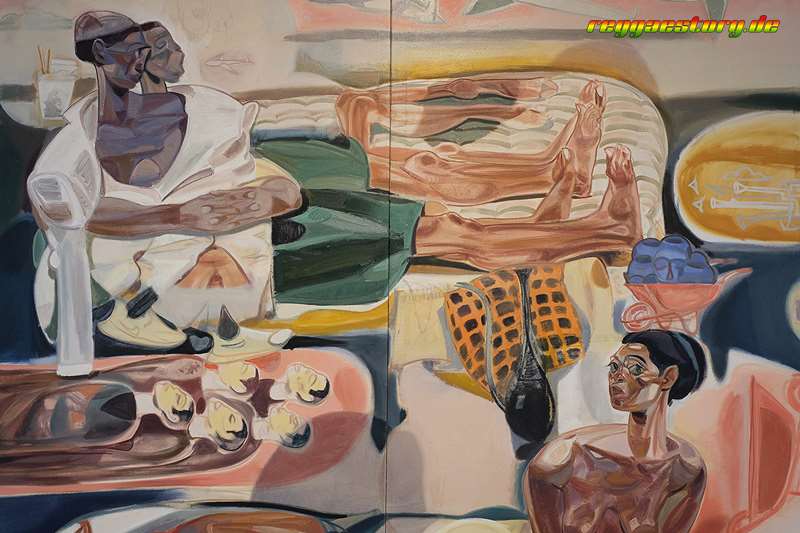 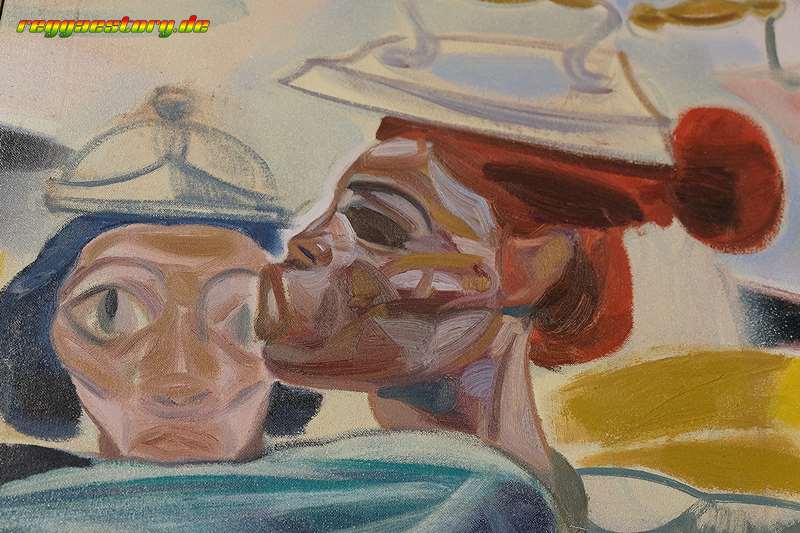 Tesfaye Urgessa, Ethiopia Pavilion “Making history is no mystery” “This Biennale is making a difference,” says Tanaka Marawu, the lead conservator of the Zimbabwe Pavilion. “It shows that in Africa, we have come to understand that we need to represent ourselves in order to share unknown narratives about our communities with the world. 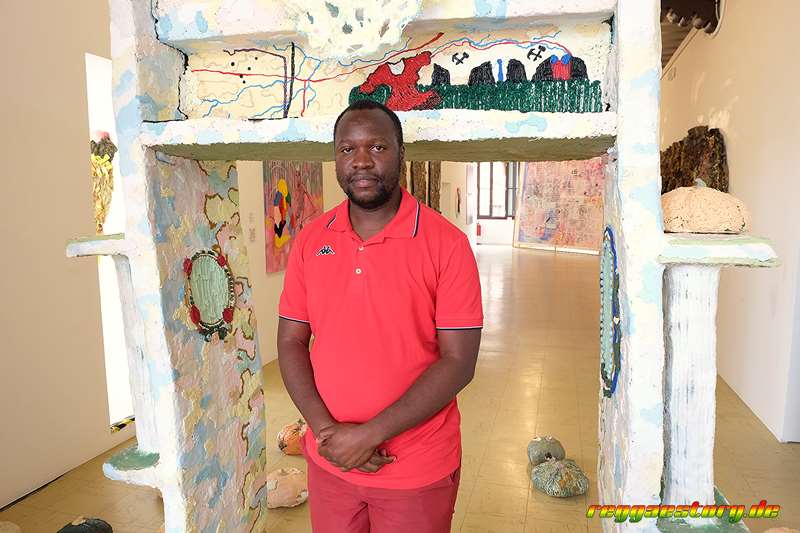 We are no longer just passengers on our own ship; we are steering the course. We are the storytellers of our own history.” This is a history of contact, which was far from equal, as highlighted in the works of Moffat Takadiwa. His large-scale installations breathe new life into discarded materials like old toothbrushes, typewriter keys, and buttons. 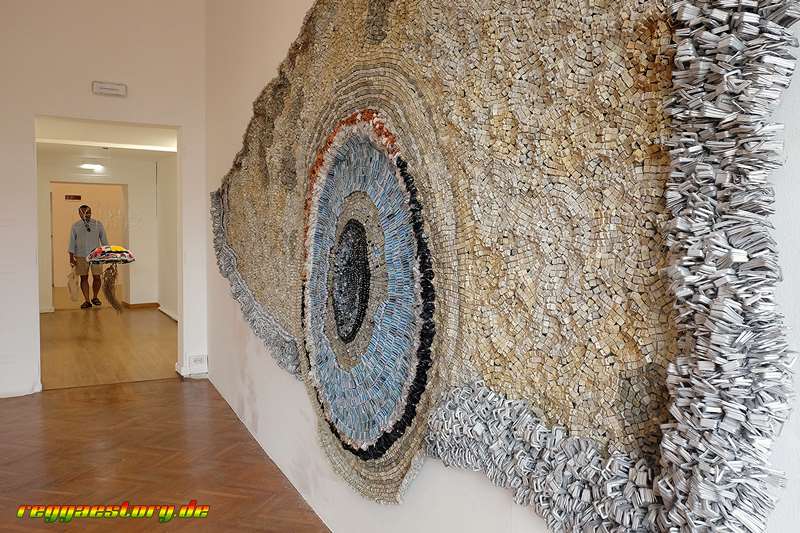 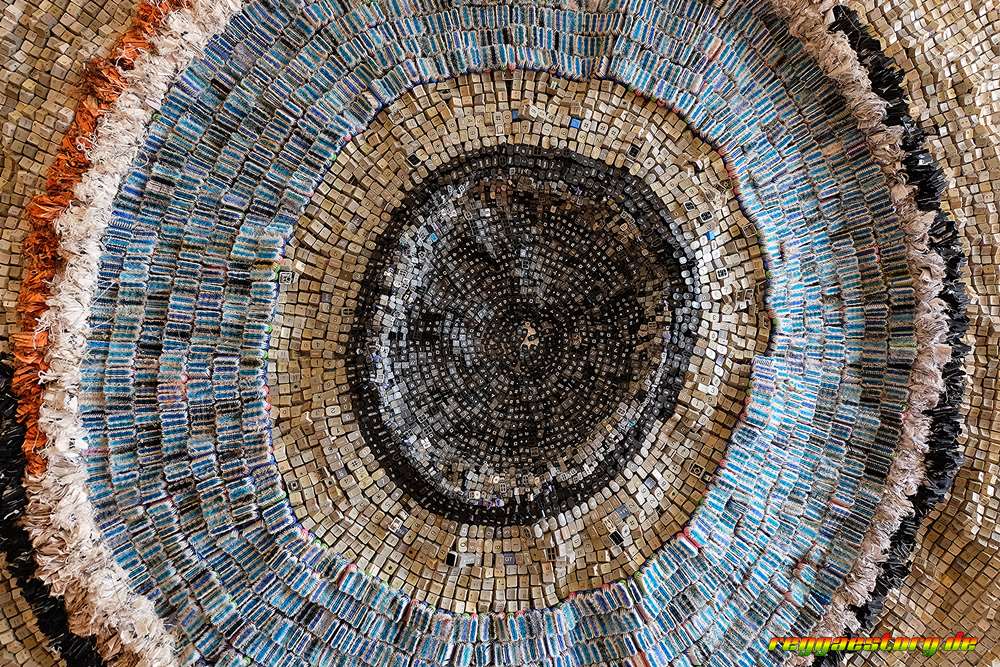 Just Delete by Moffat Takadiwa, Zimbabwe Pavilion 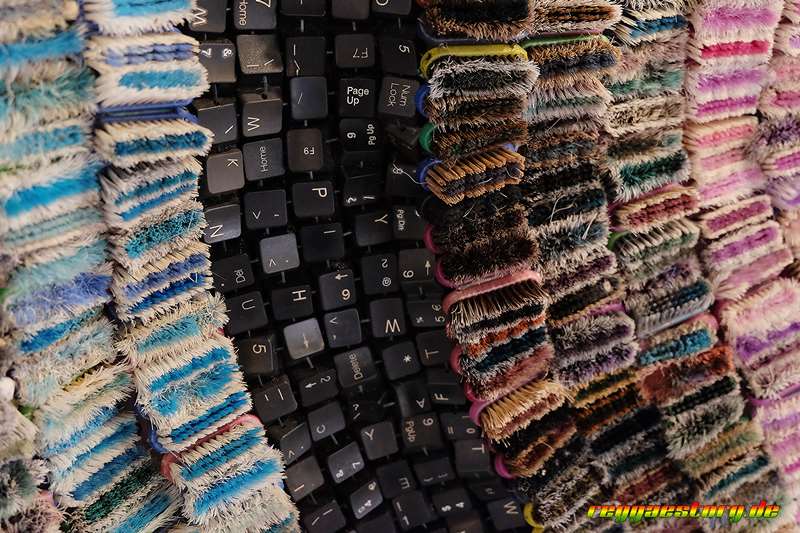 Dudu Muduri by Moffat Takadiwa, Zimbabwe Pavilion The installation Land Redistribution, which references Zimbabwe’s recent history of land appropriation from white farmers, is made from old buttons and similar objects. Visitors are offered envelopes in which they can take a few buttons home as a piece of Zimbabwe. “Africa has become a central dumping ground for the world’s waste,” says Tanaka Marawu. “But now we are shipping major artworks made from this very waste back to Europe. Takadiwa’s works are valued at up to 200,000 euros, but their true worth lies in their contribution to a better, more humane world. This shows just how powerful visual art can be in connecting our societies.” 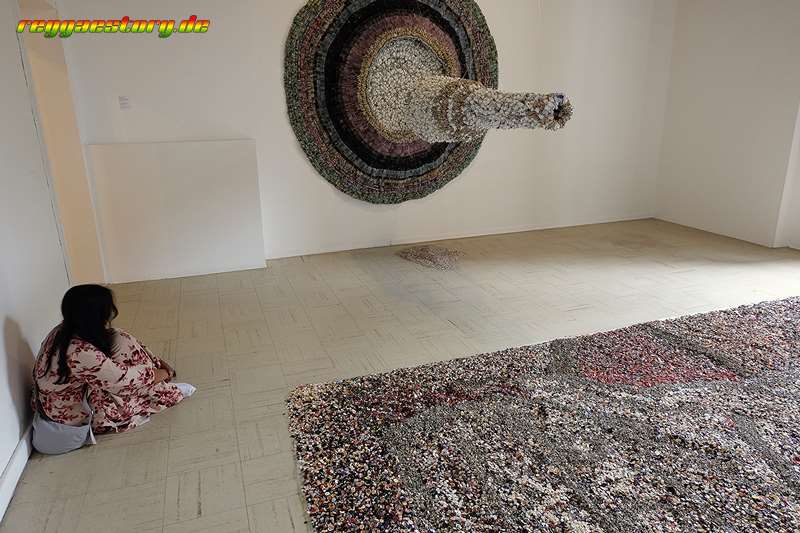 Land Redistribution by Moffat Takadiwa, Zimbabwe Pavilion 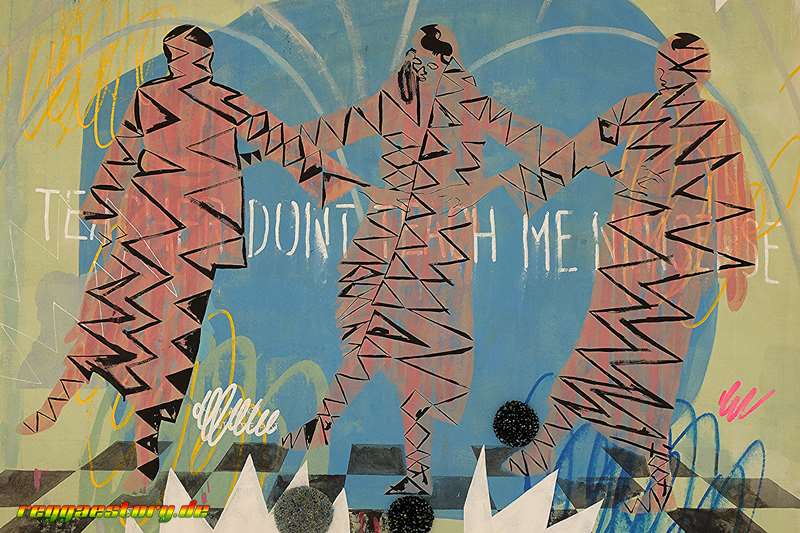 Music is a healer by Kombo Chapfika, Zimbabwe Pavilion
Copyright: www.reggaestory.de Text and photos: Werner Zips & Angelica V. Marte |