„Warrior I’m fighting
I fight for love ‘cause love is a nice thing“
(Nice Thing, Album Rainshine, 2025)
In France and the French-speaking ex-colonies,
the self-acclaimed „Raggamuffin Rambo from the Special
Commando“ (from the lyrics of „Nice Thing“)
has long been one of the big stars. This is evidenced by his monthly
listener count on Spotify, which has penetrated the dimension of an
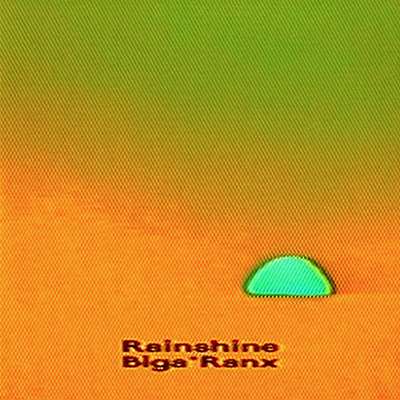
Alborosie with 1.4 million. With the album stroke of genius Rainshine, released
in June, she could massively expand into reggae massives, which are
traditionally alienated from French lyrics. Werner Zips provides some
bridges of understanding in the following.
Surgeon General's Warning: If you are prone to addictive behavior, you
should stay away from the new Biga*Ranx album Rainshine as much
as possible. Unfortunately, I was hit hard. Since its release, I have
needed a higher dose every day. Antidote unknown. Unfortunately,
nothing (new) can be expected from my all-time favorites –
Gregory Isaacs and Ninjaman. But I should have known. No song has
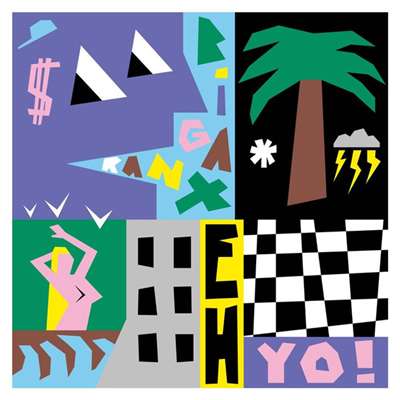
gotten into my ear as much in the last decade as 7 Days from his
latest album Eh Yo! with his melodious slogan:
“God made the world inna seven days
Human fuck it up inna million ways”
Photo:
Press Archive Biga*Ranx
The "Conditio Humana" cannot be summed up more aptly. A frightening
finding, dressed in a sing-along melody of the first order. The new
album goes one better. Each tune is a little hymn to the powers of
love, life and longing. Like Charles Bronson's harmonica in "Play Me
the Song of Death", he opens the big screen of emotions with a simple,
whistled melody. Except that he sings a "song of life", even if it is
about death like "Le Rang des Étoiles":
"In the first row of the stars
The clouds cover you
But I can see you
You speak to the planets
I speak to the abrupt steps
You left, but I stayed"
According to Biga*Ranx, the song is dedicated to all those who miss a
loved one. The words would also apply to the great French artist
Naâman, who flew behind the clouds on February 7, 2025. With
him he recorded the moving tune "Never Take" last year - "Love never
takes a break, the only eternal power is in your chest". The core
statement in Naâman's last song "Amour" – "Life
only dies in books" – can also be signed by Biga without
reservation.
Photo by
Werner Zips
So many sincere feelings in an artist who comes from the dancehall
scene, runs a sound system called Bandalero Sound and names Supercat
and Vybz Kartel as his most important influences, next to –
and this is obviously significant – Rocksteady icon Alton
Ellis? In the interview, a few more are added to our inquiry: in
addition to Nicodemus or Lone Ranger, names that are mentioned less
often in reggae are also mentioned: Edith Piaf and Jacques Brel.
Perhaps this is precisely the secret of his musicality – the
real trademark
of Biga*Ranx. His unique selling point. Biga combines the immortal
melodies of French chansons with the expressiveness and joie de vivre of
Jamaican dancehall.
An unbeatable team, behind which hovers the spirit of the almost
overpowering Serge Gainsbourg. His 1979 album "Aux Armes et Caetera",
recorded (with Sly and Robbie, the I-Threes and other greats of
Jamaican reggae) on the jam rock, was the first to combine French
chansons with hardcore yard reggae. Cultural appropriation? Biga
doesn't want to know anything about that in the interview:
"Each one teach one. Everyone inspires everyone. This may be a problem
at H&M in the sense of big
business. They steal some idea or a work of art, print it
on their shirts and earn millions with it. In doing so, they live off
the creations of a few little people who look through their fingers.
That's a real problem. But someone who uses his own creativity to
create something new out of what already exists, you don't have to
fight against him. You can fight exploiters, serial killers, and
paedophiles. But I'm just an artist who makes his music. Why do you
want to fight me of all people? I think that's the wrong fight. How can
I judge someone for something they do with love?"
For Biga*Ranx, this principle of tolerance also applies first and
foremost to intimate interpersonal love. The controversial discussions
at the Rototom two years ago showed that this is still not a matter of
course in our beloved genre. Some Jamaican artists were only persuaded
to perform under the rainbow flag, which was hoisted over the main
stage by the organizers as a deliberate sign of sexual tolerance, after
long discussions and some concessions. Biga has no understanding for
this at all:
"You can't condemn love in any form. It is a purely private matter. You
don't even have to discuss that. When it comes to love, people are
simply allowed to do what they want to do. It is their life that is
nobody's business. Some people want other people to think and live like
themselves? But that is precisely the basis of fascism. You don't have
to care what happens in other beds. When people are in love with each
other, how can I judge them? I
don't get it, I really don't get it. As long as no one is
insulted or hurt, that's not your problem. And anyway: What exactly is
the problem?"
At our first meeting, the day after his acclaimed appearance at the
Rototom 2023, Biga, who prefers to be addressed by his second stage
name Telly (from Telly* del Mundo), makes an extremely winning
impression. A sunshine mind that rests in itself, and is as far away
from vanity, star airs and graces, as Sizzla is from gender diversity.
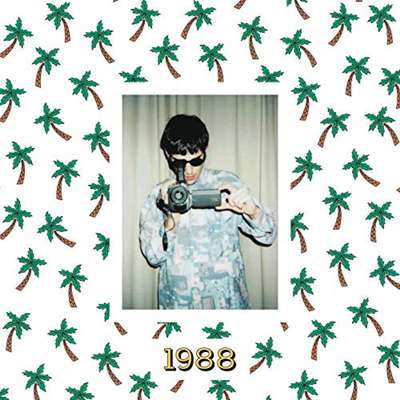
Born in 1988 in Tours, France, in the middle of the famous Val de Loire
wine region, the artist, whose birth name was Gabriel Piotrowski,
distributes musical anti-depressants like others incendiary speeches.
He also circles around fire, except that in his case it is the power of
the sun, as he emphasizes:
"My main motif is the sun. I love talking about the sun. For me, the
sunshine stands for a message of hope. In my songs you won't hear any
swearing, no bad words. I want to deliver something positive. Most of
my songs are about the sun, which of course doesn't always shine and
illuminates good and bad experiences."
Photo by
Werner Zips
Just as love does not exist without pain as its flip side, the sun
darkens daily for earthlings (thanks be to Jah). Biga*Ranx music is
anything but sunshine reggae. Rather, he knows the rainy and drought
seasons of life only too well:
"I grew up on social welfare and in France it simply means poverty.
Only music gave me the strength to free myself from it. It gave me the
energy to successfully fight for a better future."
When he plays as a one-man army with drummer as support on really big
stages like those of the Rototom, then a lot has to happen for this
energy to come out of him so tangibly that it jumps over to the massive:
"It's sometimes an almost magical feat of strength. But then to
experience how 10,000 mouths sing along to your songs, which you have
created in a quiet room, is a great feeling that never ceases to amaze
me. It all starts in your head with a few thoughts, a connection in
your brain, and then so many people sing it, it's just crazy.
Actually, I'm a shy person in normal life. I'm not too expressive, but
when I'm on stage, it's like my living room. I like to be on stage.
It's the moment when you can get rid of all the things you're
struggling with. I don't even know if I have charisma or
self-confidence, but one thing I do know: I feel absolutely good
live on stage."
From the point of view of a fan who has to be careful that Biga, who is
not even half his age, does not get him into the ambulance tent for all
the enthusiastic dance crace, the aforementioned feat of strength
remains invisible. What jumps over are the irresistible melodies that
connect a crowd
with the artist and turn it into a single dancing collective body.
Especially when the message is so full of confidence in adverse times,
as in the track Mountain
Top of the new album:
„I see the sunshine when the rainfall
On the Mountain top you gonna see me stand tall
I see the sunshine when the rainfall
And I found my strength, gonna conquer it all
Seems like some lives no matter
I know we gonna brave the slaughter
Despite the chaos the disorder
All they have for us is nada
But anyway anyway
I see the sunshine when the rainfall
Started my journey in the valley of fear
Now I’m going to the top where the air is clear“
Photos:
Press Archive Biga*Ranx
In twelve lines of text, only a few other artists can combine sharp
social criticism with optimism about the future and at the same time
provide a piece of wisdom that hyped self-help literature cannot
achieve on thousands of pages: It is important to see the sun shining
in the falling rain. The reggae alchemist Biga*Ranx manages to do this
in almost all his lyrics. In his love songs, "the rain often shines",
which means that love shows its ambivalent un/happiness – as
in what is perhaps the most beautiful love song Danse on the new
album:
"Moist eyes under my Ray-Ban,
I loved you from day one,
How am I supposed to dance when you're not there
Life is too demanding, only you can make it easier
You let the rain fall from my eyes,
There's more than me and my sampler,
But now it's too late, because
I've forgotten the time about it
Now I've been living in winter for twelve months
Nothing makes sense if you're not in my life ..."
Photo by
Werner Zips
Biga or Telly is a border breaker who has been fed like a river from
Jamaican music sources since his first trip to Jamaica at the age of 18
(2006), but meanders independently to all parts of the world. It is not
only reggae that his stream carries with him, but many other art
genres, such as graffiti, a unique video aesthetic and a penchant for
Art Brut (self-taught and solitary "amateur art"), which is sometimes
reminiscent of Basquiat, whom he holds in high regard. Especially
recommended is the video for Montagne,
a song from his last album, in this regard. He owes the inspiration for
this to his social environment:
"My luck was my artistically and technically gifted parents. My mother
is a painter, my father is a carpenter, and my brother is a DJ. Many of
my friends also make art. My main project is Biga*Ranx, but I also have
a side project under the name Telly, Telly* del Mundo. This extends to
many other genres."
Official
Video: Biga*Ranx - Montagne
How close to the Jamaican sources his creativity can bubble up is shown
in the Tune Tao
Paï Paï from the new album, closely
based on Supercat's unbeatable Ghetto
Red Hot. In terms of content, it is a battle song with a
self-irony that is rare commodity in Jamaica. Nevertheless, he delivers
a homage to his childhood idol Supercat, which sounds as if the latter
had learned French overnight. Biga has a simple explanation for how
this is possible: "As a reggae fan, you're always in Jamaica. If you
live with reggae music, the island is your universe. This rock is the
most amazing place in the world."