


10.07.2024 - THE POWER OF UTOPIA
A journey back in time to the Rototom Sunsplash Festival in Spain
Text and photos: Werner Zips and Angelica V. Marte
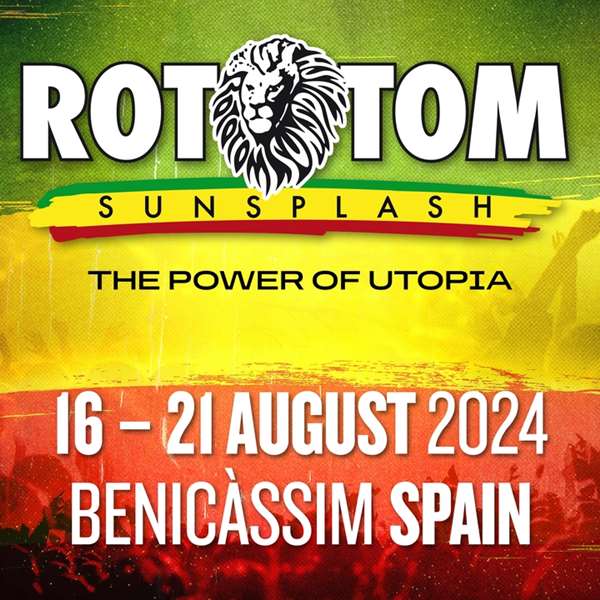 |
Once a year, a small town on the Costa del Azahar becomes the world capital – at least of the global world of reggae culture. Exactly thirty years ago, in the summer of 1994, Rototom Sunsplash, the world's by now largest reggae festival was born. After several stops in Italy, around 230,000 music fans now gather once a year in Benicàssim on the coast between Valencia and Barcelona – ideal for an extra week on holiday. The six-day festival with its extensive side programme will take place from 16 to 22 August 2024. |
| This
year's headliners are: Alpha Blondy, Beenie Man, Busy Signal,
Alborosie, the Wailers and Black Uhuru. This festival tries to live up to its social claim through moderate pricing. Tickets for all six days cost € 170, camping € 60 and glamping with tents provided between € 109 and the Emperor tent for € 890, depending on luxury needs, for the entire duration of the festival. Gastronomy prices in the culinary cosmopolitan city of the festival with open-air restaurants from all parts of the globe also remain affordable. This "global Caribbean vacation" should also remain affordable for families. Young people under the age of 13 have free admission, over 13 years of age at half price. 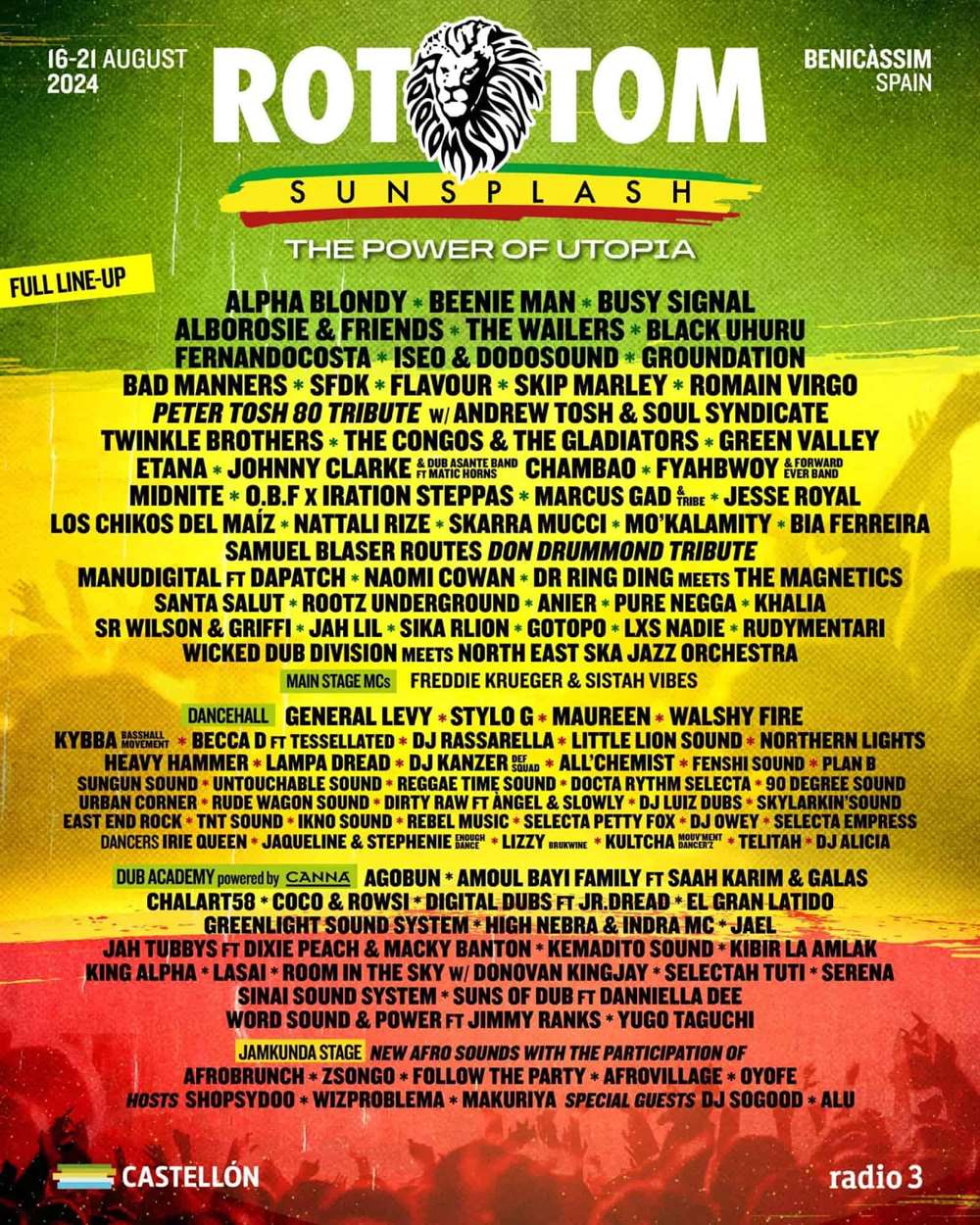 An imposing entrance gate to the "Reggae City" separates the profane world of the outside – Babylon in the language of reggae music – from the almost sacred world of the inside. Anyone who steps through this gate noticeably enters another universe, or more precisely, a sphere of social utopia, befitting very well this year’s official motto. According to the organizers, it is like a journey back in time to a future of "Peace and Love" that has yet to be born. The Rototom Sunsplash is of course also a music festival dedicated to reggae and all the genres that this music has influenced and produced: dancehall, drum and bass, reggaeton, afrobeats, dub to hip-hop and South African kwaito. But it is much more than just a music festival. With its unique, chill-like summery pathos, it strives for a potentially better world. His previous year's motto "United for Peace" had nothing less than a new global peace movement in mind. This year's motto "The Power of Utopia" makes it clear on the one hand that the goal of peace has come anything but closer in the past year, and on the other hand that resignation was and is not the agenda of reggae and its Jamaican and global protagonists. This year's program includes quite a few reggae veterans, especially The Wailers, the band of Bob Marley, Peter Tosh and Bunny Wailer, even if not much more is left from the original line-up than the band name and the son of Aston "Familyman" Barrett. Their performance is dedicated to the 40th anniversary of Bob Marley's Best of album "The Legend", the most successful reggae album in history with over 25 million units sold. It was published three years after Bob Marley succumbed to cancer and became immortal. His central message One Love was given a powerful revival by the film biography of the same name, released in 2024. The guiding principle of "One Love" appeals to the unity of humanity, to the overcoming of hatred, division and oppression in all conceivable manifestations. There was hardly a media outlet that did not report on this long-awaited film, up to a half-hour broadcast including a podcast on Radio Stephansdom – a truly long way from the Kingston ghetto of Trenchtown to the heart of Vienna. 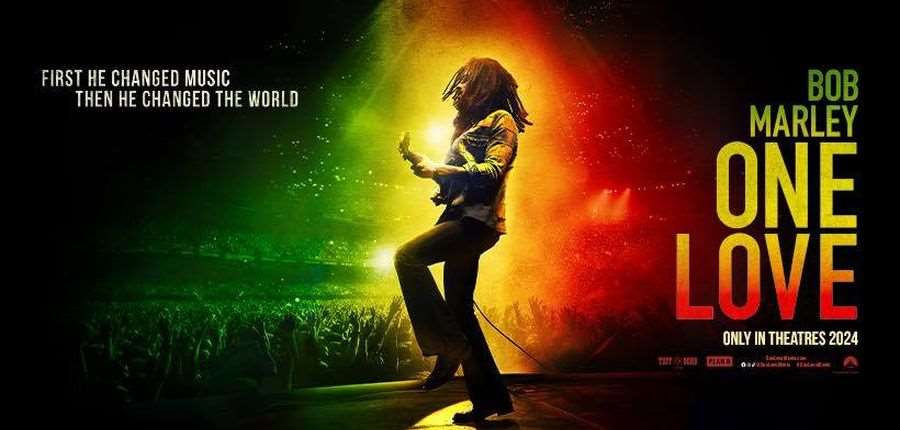 The Rototom Sunsplash wants to implement this attitude of love that breaks all boundaries within the scope of its possibilities: "With the motto 'United for Peace', we want to establish an experience of peaceful coexistence. This is intended to spread the seed of the idea of peace, which we sow here every summer, beyond the Rototom," says last year's programme booklet. Nelson Mandela was one of the godfathers of this optimistic commitment: "It always seems impossible until it is done." Anyone who decides to travel to this counter-world to the dominant present should not suffer from fear of contact with utopias and the aforementioned pathos. But even for such doubters and skeptics, the festival provides its own therapy zone with yoga sessions, so-called nature therapies and introductions to the effects of medicinal plants, including a strong shot of shamanism. Here, in the well-attended Pachamama Dome, reggae and rasta meet indigenous Mother Earth philosophies from South America. Alternative wellness holiday à la Rototom, according to the basic idea: cultural boundaries are there to be overcome. 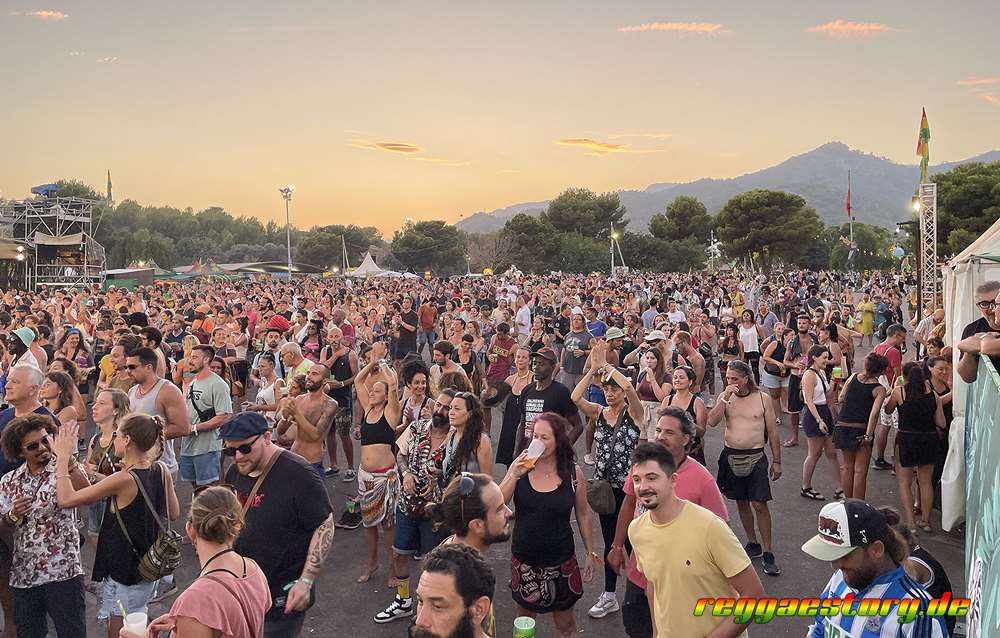 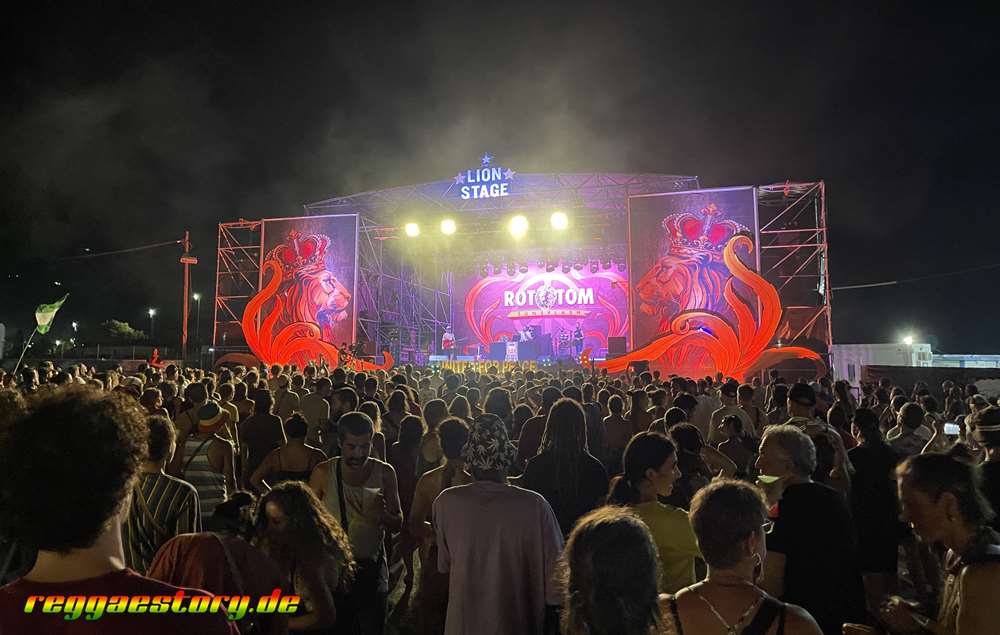 The lion symbol in the (Ethiopian) Rasta colours, which is omnipresent on the extensive festival grounds, is reminiscent of the icon of the Rastafari philosophy and its leading medium reggae: the Ethiopian Emperor Haile Selassie I, with his coronation title "Conquering Lion of the Tribe of Judah". His international work within the framework of the United Nations and the Organization of African Unity (now the African Union AU), which he (co-)founded, stood for the central values of peace, international morality, equal rights and justice. A large number of reggae performers see themselves as ambassadors of this vision, which Haile Selassie summed up in his speech to the UN General Assembly on October 4, 1963: "That until the philosophy which holds one race superior and another inferior is finally and permanently discredited and abandoned; That until there are no longer first-class and second-class citizens of any nation; That until the color of a man’s skin is of no more significance than the color of his eyes; That until the basic human rights are equally guaranteed to all without regard to race; That until that day, the dream of lasting peace and world citizenship and the rule of international morality will remain but a fleeting illusion, to be pursued but never attained”. You can listen to the original on Youtube or in Bob Marley's famous song "War", which will most likely also be performed at the Rototom 2024 by The Wailers. 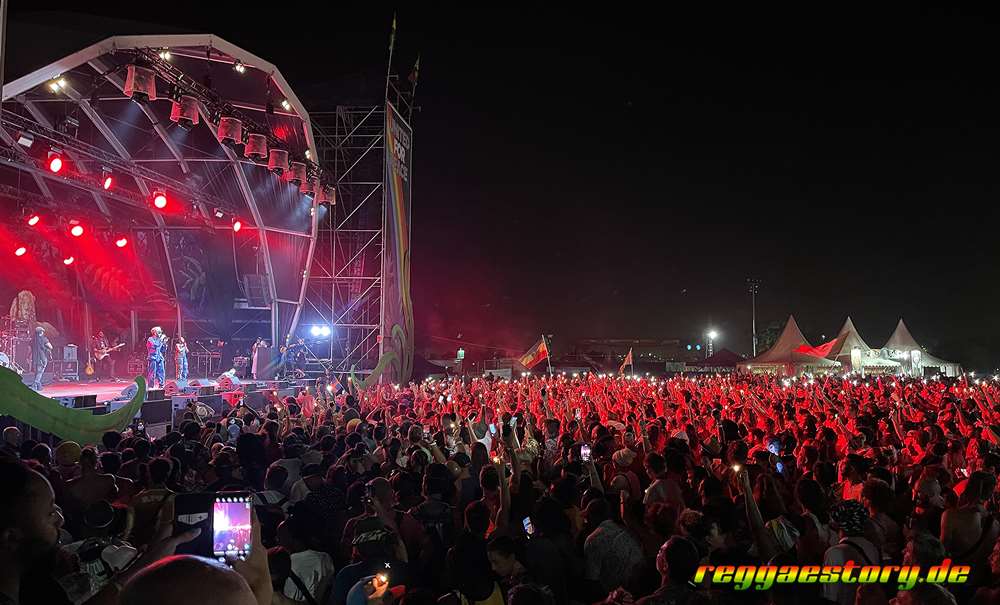 Bits and pieces of this ideology can be found at every turn on the festival grounds. They are the visible and much more tangible substance of this festival of tolerance and peaceful co-existence. This is about cultural exchange and cross-fertilization. Divisive discourses such as the talk of cultural appropriation understandably find no breeding ground here. They would ultimately deprive the self-proclaimed "European Reggae Festival" of its right to exist. His core idea is a world republic of reason and justice, envisioned inter alia by Haile Selassie I, on the achievable scale of the global reggae community. Therefore, African philosophy seminars are on the agenda of the program as well as the rights of the world's indigenous populations, the principles of sexual diversity under the banner of the rainbow and, “naturally” in the double sense, the great unsolved challenges of the present: the protection of biodiversity, the fight against the climate crisis and for an all-encompassing vision of sustainability. The child-friendly festival also offers play and learning zones in the "magical world" and a teen yard for urban dance, skating, breaking, open mic and poetry slams. 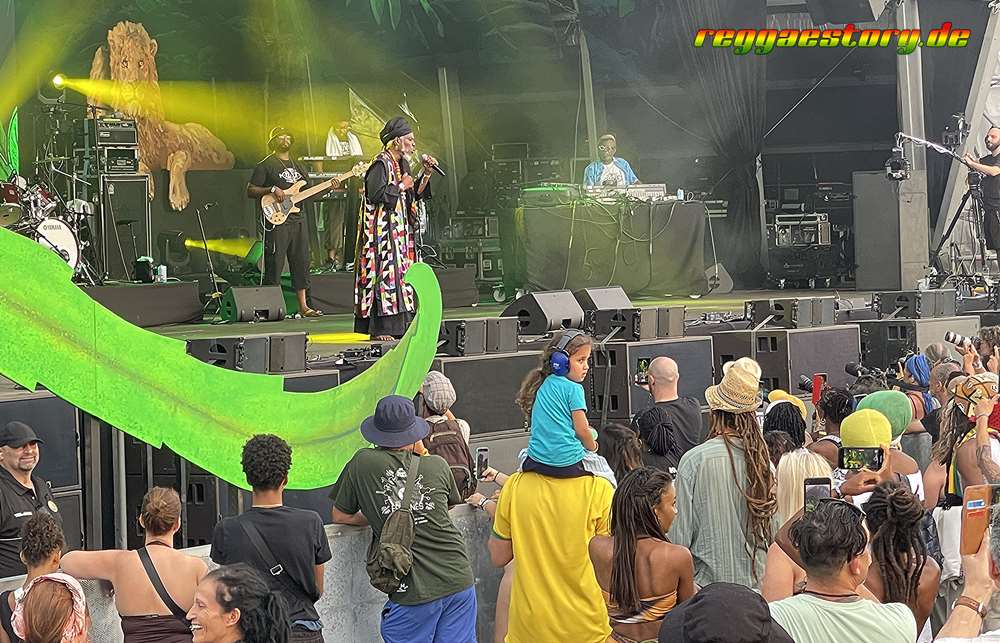 Mutabaruka - Rototom 2023 Public discourse rooms in airy tents and video conferences with leading intellectuals are just as much a part of the daily routines as the social art gallery, where artists produce live works on the general theme of the festival. The well-organized Reggae University, which lasts four hours every day, tries to shed light on every possible aspect of reggae and its cultural contexts. Its well-attended panels involve social and cultural scientists, musicologists and artists – a unique selling point of this multi-layered festival. This informal university delivers brain food before the music gets its turn at sunset on six parallel stages. For visitors, the multi-page programme means that they are always spoilt for choice. Although Benicàssim has its own reggae beach by the sea, only a few make it there when faced with opportunities to learn more about their favorite music from practitioners of reggae. 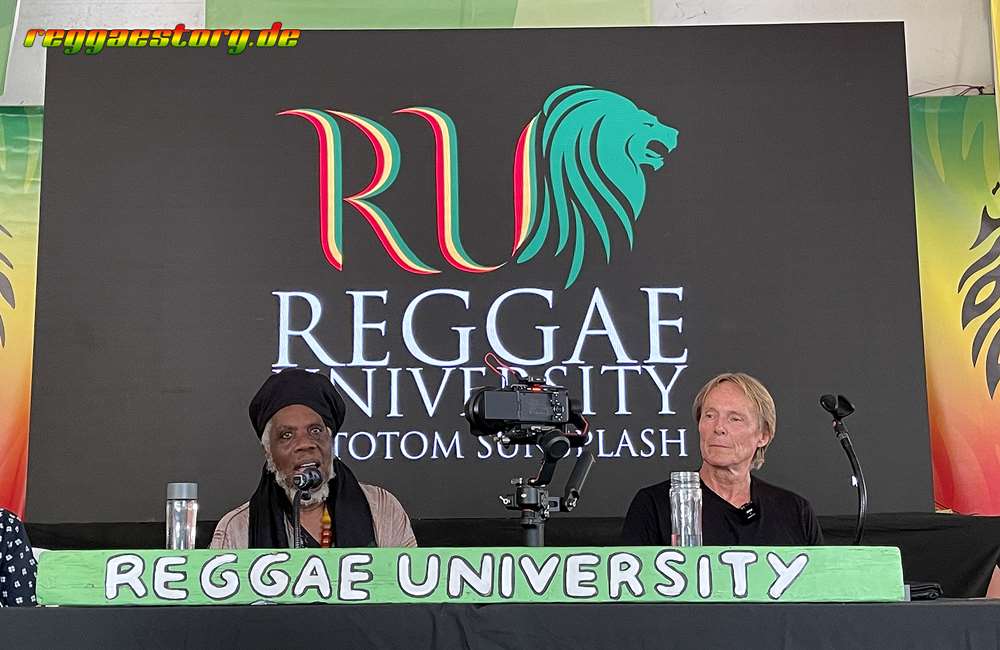 The Jamaican dub poet Mutabaruka and author Werner Zips at the Rototom 2023. The organizational achievements behind this can only be guessed at. There are no long waiting times for toilets here – not even for women. The numerous restaurants and ice cream shops ensure prompt service. No cash necessary, just reusable drinking cups. A festival as a training ground for the desired plastic-free and emission-neutral world. Perfection is the secret to the relaxed atmosphere and freedom of spirit. For example, a mobile dancehall disco on bicycles in the afternoon. Hundreds follow the bright yellow sound system, his DeeJay and reggaeton sounds from oversized speakers. Easily recognizable, it is an allegory of the mobile discos from the Kingston ghetto districts of Jamaica, which became the pioneers of hip-hop, reggaeton and Afrobeats. Afterwards, a Nyahbinghi drumming session at the House of Rastafari, which is run by Italian Rastas, reminds us of the spiritual foundations of reggae. 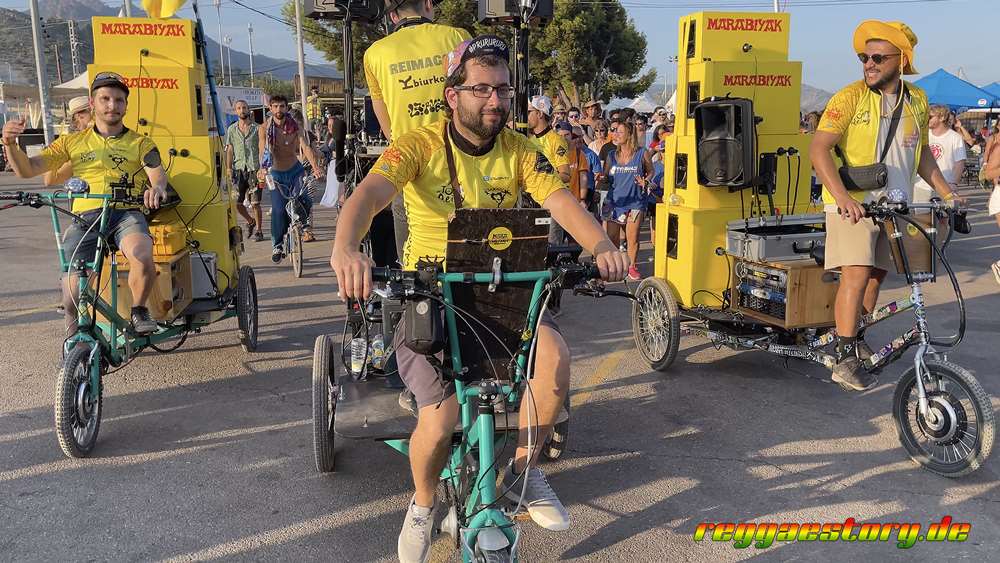 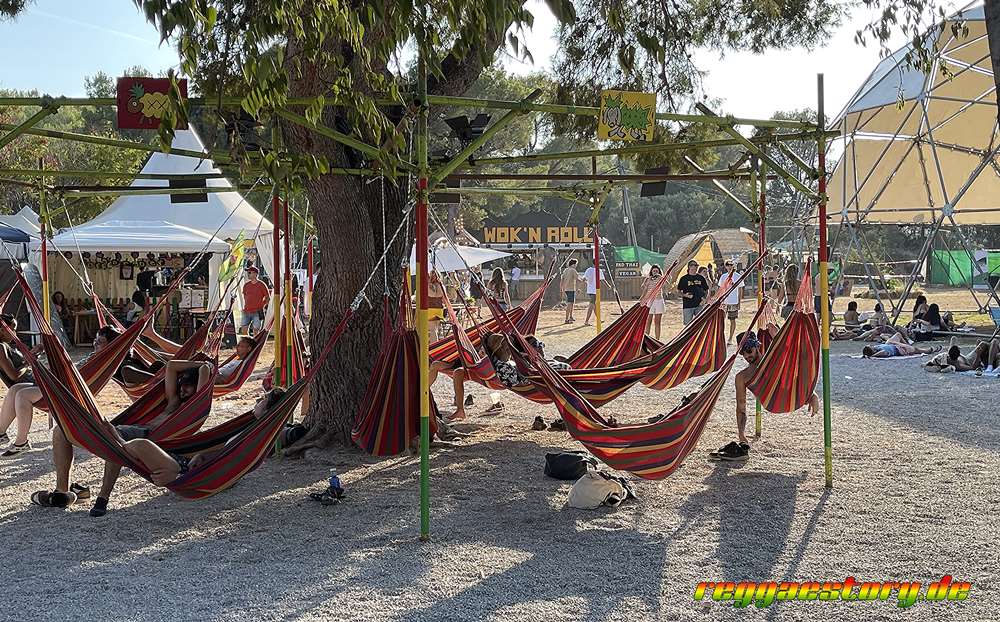 Artists of the first hour – the so-called foundation artists – seamlessly pick up where they left off decades ago: Don Carlos, co-founder of Black Uhuru, Mutabaruka, the best-known dub poet and icon of the Rasta movement, the veterans of the Inna de Yard collective and, above all, the greatest living reggae legend, Burning Spear. At the age of 77, he inspires the audience not only with hits from almost seven decades, but also with the most touching moment of the festival for many, when he brings his wife, who suffers from dementia, onto the stage and publicly declares to her and the world that Burning Spear would never have existed without her. This year, the oldies are again well represented with Johnny Clarke, The Congos, Alpha Blondy and a formation of Black Uhuru, which should at least include founding member Duckie Simpson. In addition to its many other strengths, the Rototom Sunsplash also offers the rare chance of a journey back in time to the early days of reggae and its inseparably connected Rastafari livity. The cross-generational program is just that: program. The music here is celebrated from its roots, ranging from established artists such as Alborosie, Busy Signal, Etana or Beenie Man to newcomers represented by Naomi Cowan, Nattali Rize, Jah Lil or Skip Marley, a grandson of Bob Marley. It is an incomparable experience when the vibes sweep over into the various audiences on many stages at the same time and the anthems of the evening are created depending on musical preferences. As in the previous year with the French artist Biga *Ranx, whose song 7 Days may at least to us became the defining moment of the festival: God made the world inna seven days Human fuck it up inna million ways All I'm looking for is better days … Sung along from thousands of mouths, whose voices unite in the longing for better times, what could provide a better motto for this year? After a year of steadily increasing social conflicts and political capers, the Rototom Sunsplash in Benicàssim promises a break like few other places on this planet, loosely based on Arnold Schwarzenegger's Terminator wish: "I need a vacation". 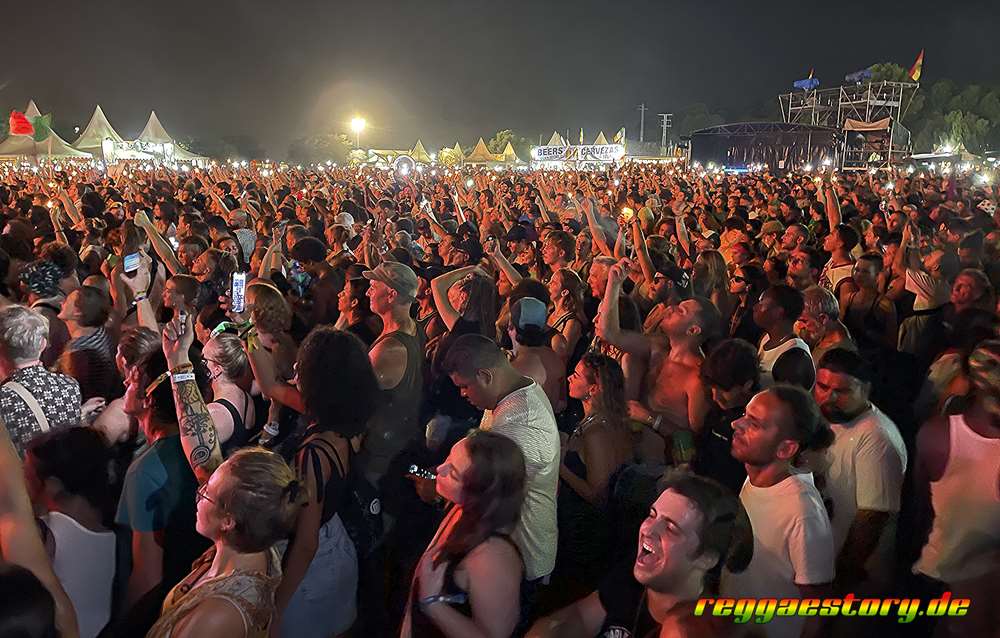 Literature tips for this trip: Werner Zips: Hail di Riddim. Reports from the Reggaeversum JamaicAfrica: Promedia Verlag. 2015 Mutabaruka, Sebastian Schwager and Werner Zips: Mutabaruka – The Verbal Swordsman. Perspectives from the Cutting Edge and Steppin Razor: Ian Randle Publishers. 2023 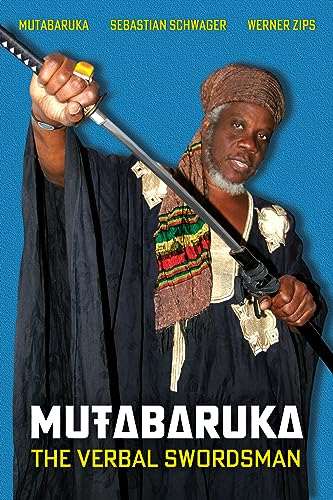
 Copyright: www.reggaestory.de Text and Fotos: Werner Zips & Angelica V. Marte |
